


Author: Mike Zhang, Senior Mixing Technology Specialist, Qingdao OULI Machine
—
Qingdao OULI Machine, a recognized manufacturer of rubber and plastics mixing equipment, has released an updated line of internal mixer machines designed to meet the growing demand for high-consistency rubber compounding. These machines – also known as Banbury-type mixers – are engineered to deliver uniform dispersion, thermal stability, and operational flexibility for tire production, conveyor belts, seals, and technical rubber goods.
Unlike open mills, an internal mixer machine processes materials in a sealed mixing chamber, where two rotors work together to shear, fold, and blend rubber compounds with fillers, oils, and other additives. OULI’s current models focus on practical improvements that help production lines achieve repeatable batch quality while reducing energy consumption per kilogram of material.
Key Engineering Features of This Internal Mixer Series
1. Optimized Rotor Geometry for Better Dispersion
The internal mixer machine from OULI is available with either shear-type or meshing-type rotors. Shear rotors – offered in two-wing, four-wing, and six-wing configurations – accelerate ingredient incorporation. Meshing rotors provide a wider edge profile and involute-like intermeshing areas, which enhance heat exchange and improve dispersion for temperature-sensitive formulations. This flexibility allows users to match rotor design to their specific recipe and process requirements.
2. Large-Area Circulating Water Cooling System
All compound-contact surfaces are cooled through an integrated water circulation system. The internal mixer features an expanded cooling surface that helps remove frictional heat generated during mixing. An optional water temperature regulation unit (WTU) can be attached to stabilize mixing temperature automatically. This design supports consistent compound viscosity and scorch safety, especially during extended mixing cycles.
3. PLC Control with Time and Temperature Modes
The mixing cycle is managed by a programmable logic controller (PLC). Operators can switch between manual and automatic functions easily. The system monitors mixing time, compound temperature, and ram pressure. Recipe parameters can be stored and recalled, reducing batch-to-batch variation. Safety interlocks and fault diagnostics are built in to protect both the operator and the equipment.
4. Modular Construction for Site Flexibility
The internal mixer machine is divided into three main modules: feeding device, main body, and base frame. This design simplifies installation in facilities with limited headroom or special floor layouts. Modularity also shortens maintenance downtime, as individual sections can be accessed or replaced without fully disassembling the entire unit.
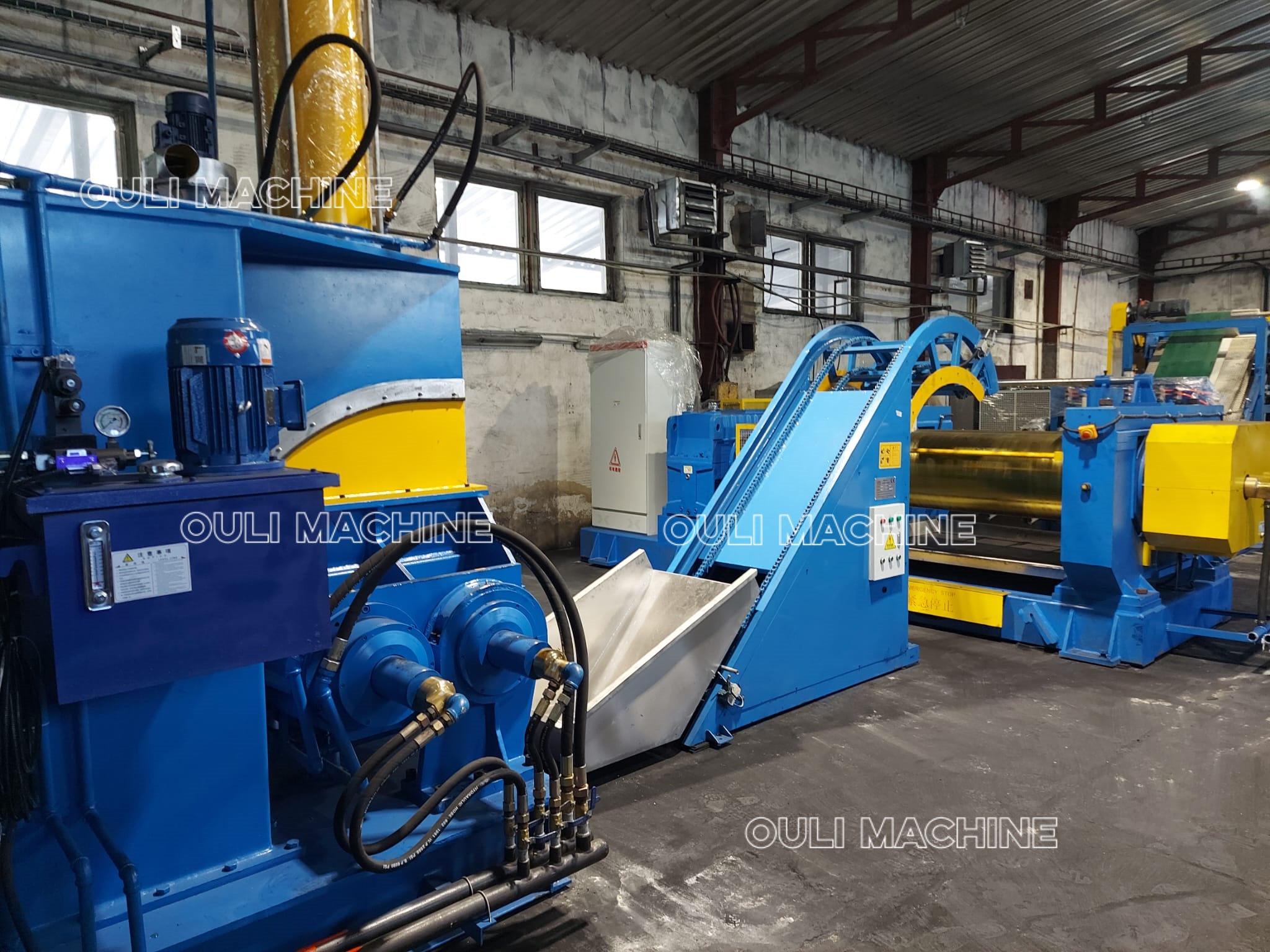
Representative Technical Specifications (Selected Models)
|
Parameter/ model |
X(S)M-1.5 |
X(S)M-50 |
X(S)M-80 |
X(S)M-110 |
X(S)M-160 |
|
|
Total volume (L) |
1.5 |
50 |
80 |
110 |
160 |
|
|
Filling factor |
0.6-0.8 |
0.6-0.8 |
0.6-0.8 |
0.6-0.8 |
0.6-0.8 |
|
|
Rotor speed (r/min) |
0-80 |
4-40 |
4-40 |
4-40 |
4-40 |
|
|
Ram pressure (MPa) |
0.3 |
0.27 |
0.37 |
0.58 |
0.5 |
|
|
Power (KW) |
37AC |
90DC |
200DC |
250DC |
500DC |
|
|
Size (mm) |
Length |
2700 |
5600 |
5800 |
6000 |
8900 |
|
Width |
1200 |
2700 |
2500 |
2850 |
3330 |
|
|
Height |
2040 |
3250 |
4155 |
4450 |
6050 |
|
|
Weight (kg) |
2000 |
16000 |
22000 |
29000 |
36000 |
|
Note: Additional models from lab-size 1.5L to heavy-duty 160L are available upon request.
Application Examples
- Tire tread compounds: The internal mixer machine achieves uniform carbon black dispersion for consistent tread wear.
- Sealing profiles: Meshing rotors provide gentle mixing for EPDM profiles requiring low temperature rise.
- Masterbatch production: High fill factors and strong shear facilitate rapid incorporation of fillers and oils.
Why Search for an Internal Mixer Machine?
When rubber processors search for an “internal mixer machine,” they typically look for:
- Reliable dispersion quality – Fewer rework batches and lower rejection rates.
- Controlled mixing temperature – Prevents premature vulcanization (scorch).
- Durable construction – Mixed materials include abrasive carbon black and reinforcing silica.
- Ease of maintenance – Rotor tip clearance adjustment and dust seal replacement should be manageable.
Qingdao OULI Machine has addressed these needs through iterative design improvements based on customer feedback from more than two dozen rubber mixing plants.
—
FAQ – Internal Mixer Machine
Q1: What is an internal mixer machine used for in the rubber industry?
A: An internal mixer machine – sometimes called a Banbury mixer – is used to mix raw rubber (natural or synthetic) with carbon black, silica, oils, sulfur, and accelerators inside a sealed chamber with two rotors. The result is a homogenous rubber compound ready for calendering, extrusion, or molding.
Q2: What is the difference between shear-type and meshing rotors in an internal mixer?
A: Shear-type rotors (two-wing, four-wing, six-wing) create high shear force to break down and disperse fillers quickly. Meshing rotors have a closer, involute-like profile that provides a larger cooling surface and more gentle mixing, which is beneficial for heat-sensitive compounds.
Q3: How do you control the temperature inside an internal mixer machine?
A: Temperature is controlled through three mechanisms: 1) circulating water through the chamber body, rotors, and ram; 2) adjusting ram pressure to change frictional heat generation; and 3) using a water temperature regulation unit (WTU) to automatically adjust cooling water temperature based on the compound’s actual temperature.
Q4: What size internal mixer machine do I need for my production?
A: Size depends on batch weight and required output. Lab models (e.g., 1.5L) are for formulation development. Production models range from 50L to 160L. OULI typically recommends a filling factor of 0.6–0.8 of total chamber volume. Contact our engineering team with your batch weight and cycle time target for a precise recommendation.
Q5: Is a PLC-controlled internal mixer better than a manual machine?
A: For consistent quality, yes. A PLC system stores recipes, controls mixing time and temperature, and reduces operator error. It also provides data logging for traceability – which is often required by automotive and aerospace rubber part specifications.
Q6: How often should the dust seal on an internal mixer be replaced?
A: Dust seal life varies with compound abrasiveness and maintenance practices. In typical carbon black-filled compounds, inspect seals every 3–6 months. Most users plan replacement every 12–18 months. OULI designs dust seals for field replacement without complete disassembly of the mixing chamber.
Q7: Where can I get technical support or spare parts for my OULI internal mixer?
A: Qingdao OULI Machine provides direct technical support, wear parts (rotors, chamber liners, dust seals, rams), and remote troubleshooting. Contact our after-sales team via email or the contact form on our website.
—
For more technical data or to discuss a custom configuration, please contact the engineering department at Qingdao OULI Machine.
Post time: May-16-2026


